
The People Behind the Helmets
Every great racing series is defined not just by the cars, but by the people who drive them. The Future Classics Championship is no exception. Behind every roaring engine, every daring overtake, and every tire-scorched corner, there’s a story — not of fame or fortune, but of pure passion.
The Future Classics paddock is a world where drivers are mechanics, storytellers, and dreamers all at once. They don’t race for sponsorship deals or television coverage. They race because something inside them refuses to settle for watching from the sidelines. For them, racing isn’t a hobby — it’s part of who they are.
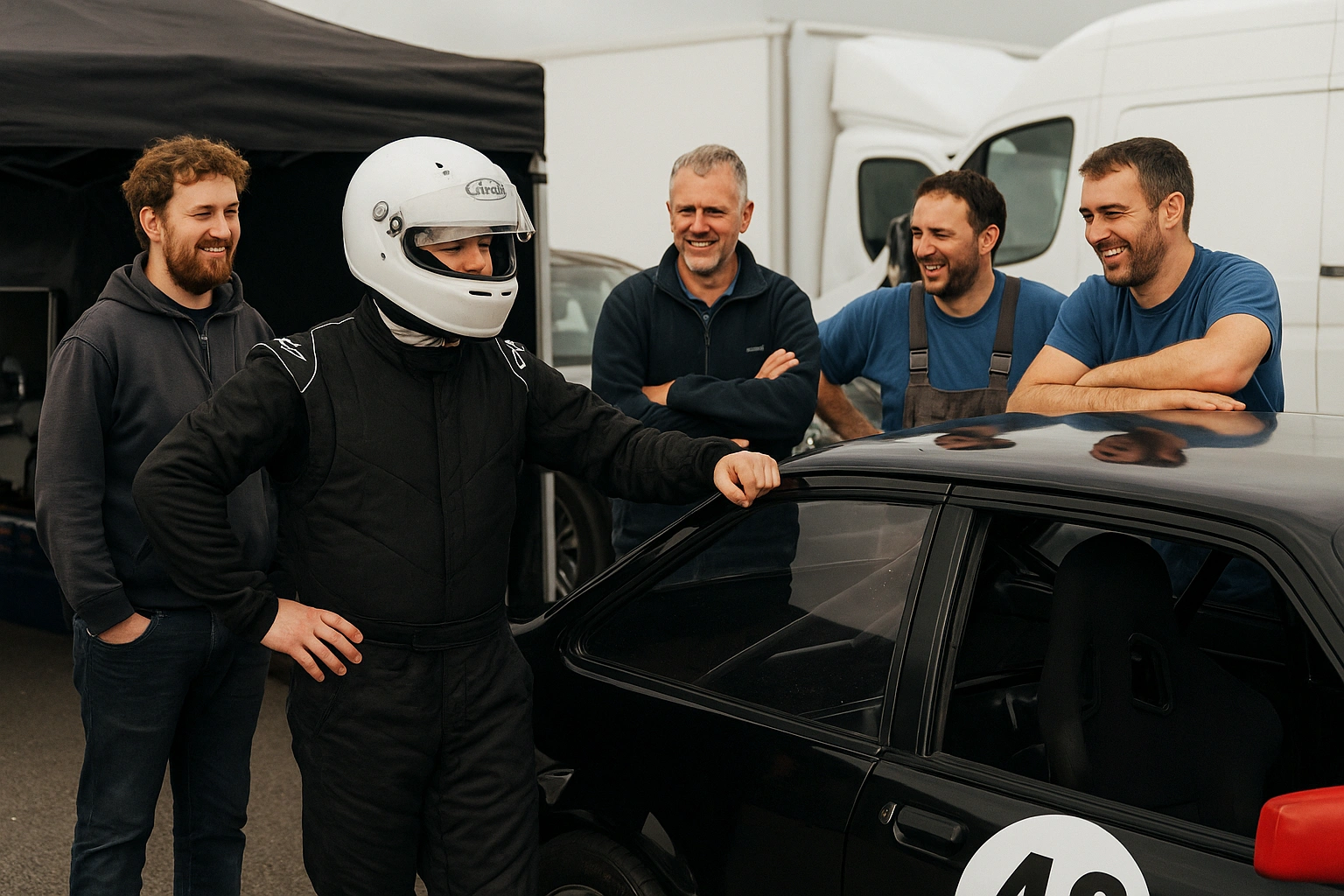
Walking through the paddock before a race, you quickly notice how different this world feels compared to professional motorsport. There are no towering hospitality units or corporate logos dominating the scene. Instead, you’ll find vans, toolboxes, and groups of friends working side by side. Drivers joke with rivals, families lend helping hands, and every car carries fingerprints of personal effort. This isn’t about image — it’s about authenticity.
Each driver brings something unique to the grid: some are lifelong racers, others are weekend warriors who spend their weekdays in offices or workshops. What unites them is a deep respect for the craft and a shared hunger to push both themselves and their machines to the limit.
Passion That Starts Early
Ask any Future Classics driver where it all began, and their answer often traces back to childhood. The love for speed doesn’t appear overnight — it’s planted in the early memories of watching a parent drive, visiting a racetrack for the first time, or building model cars on a bedroom floor.
For some, it was the magic of Mondello Park that sparked the fire. For others, it was a local karting track where they first felt what it meant to control a machine on the edge. Many drivers remember sneaking into garages just to watch older racers work, breathing in the smell of fuel and rubber as if it were oxygen.
That early fascination never fades — it evolves. Years later, those same kids are now behind the wheel of their own machines, keeping the same excitement alive. They might not have millions in sponsorship or state-of-the-art facilities, but they have something far more powerful: commitment.
A Balance Between Everyday Life and Adrenaline
What makes the Future Classics drivers truly remarkable is how they balance normal life with the intensity of racing. During the week, they might be engineers, teachers, small business owners, or students. But come the weekend, they become racers — focused, fearless, and free.
Preparation starts long before arriving at the track. Many of these drivers maintain their own cars, spending evenings in garages tuning engines, checking fluids, and rehearsing pit routines. It’s not unusual to find someone fixing a suspension arm on Friday night, just hours before loading up the trailer.
They fund their racing from their own pockets — not because it’s cheap, but because it’s worth it. Every spare euro goes into fuel, tires, and entry fees. And when the green flag drops, the world outside disappears. The deadlines, emails, and bills fade into silence, replaced by one clear sound — the engine singing at full throttle.
That ability to switch between everyday life and the high-stakes world of racing is what gives this community its soul. It’s not about escape; it’s about balance. Racing gives meaning to effort, and effort gives meaning to racing.
A Community That Feels Like Family
In the Future Classics paddock, there are no strangers. Even newcomers are welcomed with open arms and friendly advice. Veterans share their experience freely — offering setup tips, spare parts, or simply encouragement before a first qualifying session. The spirit here is competitive, yes, but never cutthroat.
Between races, you’ll find drivers gathered around tables with cups of tea, sharing stories of near misses, late overtakes, and unforgettable duels. They laugh about mistakes and celebrate each other’s successes. When someone’s car breaks down, a small crowd gathers to help. Tools are passed, jokes are cracked, and somehow, the car always makes it back on track.
It’s a type of unity rarely seen in other sports. The drivers may battle fiercely during the race, but once the helmets come off, the camaraderie returns instantly. They understand each other’s dedication because they’ve all lived it — the long nights in cold garages, the frustration of failed parts, the relief of crossing the finish line no matter the position.
Even families and friends play an essential role. Many drivers travel with their partners or children, turning race weekends into small adventures. Kids help clean cars, wives and husbands keep the team organized, and parents cheer from the sidelines with the same intensity as the drivers themselves. It’s a community built on shared effort and mutual respect.
Experience Meets Enthusiasm
The grid is a blend of generations. On one side, you’ll find veterans who’ve been racing since the 1980s — calm, methodical, and wise. They know every corner of Mondello and Kirkistown by heart. On the other side are younger drivers — energetic, daring, and eager to prove themselves.
This mix creates an incredible dynamic. The experienced racers teach patience, control, and respect for machinery. The younger ones bring fresh energy and fearless determination. Together, they push the competition higher and keep the championship evolving without losing its roots.
Many veterans take pride in mentoring newcomers, explaining not just racing techniques but the culture of sportsmanship that defines Future Classics. You’ll often see a seasoned driver leaning over a younger racer’s car, pointing out setup ideas or sharing tricks for braking into the hairpin. It’s not about keeping secrets — it’s about passing on wisdom.
The younger generation, in turn, brings modern thinking — lighter materials, data analysis, and creative engineering solutions. Yet they all share the same love for the analog side of racing — the feeling of being connected to every vibration, every shift, every slide.
The Emotional Connection
For most of these drivers, racing is deeply personal. Every event carries emotion — pride, anxiety, excitement, and relief. The car becomes more than metal and rubber; it becomes part of their identity.
There’s the satisfaction of hearing the engine fire after days of work, the anticipation before lining up on the grid, and the rush of acceleration that erases everything else. There’s also the heartbreak of mechanical failures and the humility of starting over. But that’s all part of the story.
Each driver remembers their first podium, their first spin, and the first time they realized they were part of something bigger than themselves. The connection goes beyond winning — it’s about self-improvement. Every lap teaches patience, discipline, and resilience. Racing strips away ego and leaves only truth: the driver, the car, and the challenge ahead.
That emotional bond is what keeps them coming back. Even after crashes, expenses, and setbacks, the call of the track is irresistible. Because racing, at its core, is not about perfection — it’s about passion.
Beyond Competition
At the end of the day, when the engines quiet and the paddock lights fade, the Future Classics drivers stay to talk, to laugh, to plan for the next round. There’s a sense of belonging that extends far beyond competition.
For them, the track isn’t just a place to prove themselves — it’s a place to connect, to learn, and to feel alive. They know that the friendships built here will last long after the trophies gather dust.
In every handshake, every helping hand, and every shared story lies the true heart of the Future Classics Championship — not the machines, but the people who make them come alive.
And as the next round approaches, these drivers will once again return to the garages, fire up their engines, and take to the grid — not because they have to, but because they can’t imagine life without it.
The Faces of the Grid
As the sun rises on race day, the paddock slowly comes alive. Cars glisten under a thin layer of dew, the smell of petrol hangs in the air, and laughter ripples through the crowd as drivers gather for morning briefing. It’s here — before the engines roar — that the true personalities of the Future Classics drivers reveal themselves.
Some are quiet, methodical, and focused, mentally running through corners before the first session even begins. Others are loud and cheerful, cracking jokes to ease the tension. There’s the perfectionist who checks tire pressures twice, the storyteller who can recall every lap from last season, and the latecomer who’s still bolting on parts minutes before qualifying.
Each one brings their own rhythm to the grid, and together they form the heartbeat of the championship. There’s no hierarchy here — only mutual respect. A driver in a modest hatchback earns the same applause as one in a finely tuned coupe, because everyone knows the effort it takes just to be here.
When helmets go on, the differences disappear. Every driver becomes part of the same collective symphony — a shared language of revs, shifts, and tire squeal. On the track, egos dissolve, replaced by the deep understanding that they’re all chasing the same thrill: the perfect lap.
Stories Written in Asphalt
Behind every number on the side of a car is a story worth telling. Some drivers have been part of the series since its early days, building their cars with their own hands, improving them bit by bit over the years. Others are newcomers, stepping into the world of competitive motorsport for the first time. But no matter their experience, each carries a history that adds color to the championship.
There’s the veteran who started racing in the 1980s, driving the same model he once owned as a young man, now meticulously restored and still quick enough to keep up with modern builds. There’s the father and daughter duo who share one car — he races in one round, she in the next — turning every event into a family weekend. There’s the competitor who once worked trackside as a marshal, saving for years just to buy a project car and finally take his place on the grid.
These stories make Future Classics more than a race series. They turn it into a living archive of personal journeys, where passion replaces privilege and determination levels every playing field. The drivers aren’t just competing; they’re writing their own chapters in motorsport history — one corner, one race, one season at a time.
The Art of Self-Reliance
Most Future Classics drivers don’t arrive with teams of mechanics or engineers. They are their own pit crew. Between sessions, they roll up their sleeves, grab their toolkits, and dive under their cars with practiced precision. It’s not unusual to see a driver still wearing half of their race suit while changing brake pads or re-torquing wheels.
This self-reliance breeds a unique kind of pride. When a car performs flawlessly on track, it’s not just a victory for the driver — it’s a validation of their own craftsmanship. And when things go wrong, they don’t point fingers; they fix them.
You’ll often see clusters of drivers working together, sharing tools and advice, solving problems with creative ingenuity. A missing bolt, a damaged hose, a dying alternator — in this paddock, those are just opportunities for collaboration. Someone always has a spare part or an idea that saves the day.
It’s a reminder that while racing is individual on the track, it’s deeply collective behind the scenes. Every success is built on a network of helping hands and open hearts.
Learning, Losing, and Growing
For every podium celebration, there’s a story of frustration that came before it. Every driver knows the feeling of a broken gearbox, a blown tire, or a mistake that costs them a position. But rather than discouraging them, these moments are what keep them learning.
Racing teaches humility faster than any other pursuit. The same corner that feels perfect one lap can betray you the next. The same car that flies through qualifying can falter under pressure. That unpredictability is what makes it beautiful — and addictive.
Future Classics drivers understand that progress isn’t always measured in trophies. Sometimes it’s shaving a second off your lap time, mastering a tricky turn, or simply finishing a race you couldn’t last season. Improvement becomes a form of artistry, and every race weekend a new chance to refine the craft.
When setbacks happen, the community rallies. You’ll see drivers who’ve just finished their own sessions helping push a rival’s car back to the paddock, offering tools, or helping diagnose a fault. No one leaves another racer stranded, because they’ve all been there before.
Family, Friendship, and Fuel
For many drivers, racing is a family affair. Partners handle timing sheets, parents keep the garage organized, and kids proudly wear the team shirts. The paddock feels like an open neighborhood — cars parked close, conversations blending, food being shared between tents.
After the day’s races, the sense of togetherness grows even stronger. The smell of barbecues fills the air as stories from the track turn into laughter. Rivalries dissolve into friendship. You might see two drivers who battled fiercely all day now sitting side by side, comparing lap times on their phones and already joking about their next rematch.
This blend of community and competition is what makes Future Classics so unique. It’s grassroots racing in the purest sense — accessible, passionate, and full of heart. Nobody here is chasing fame. They’re chasing fulfillment. And somehow, in that simplicity, they find more joy than many professionals ever do.
The Mindset of a Racer
What drives someone to risk their time, money, and energy for the fleeting rush of a race weekend? For the Future Classics drivers, the answer is simple: they can’t imagine not doing it.
Racing gives them something no other pursuit can — a sense of clarity. When they’re behind the wheel, everything else fades. There are no distractions, no deadlines, no worries about the world outside the circuit. There’s only focus — the next corner, the next brake marker, the next chance to push a little harder.
That mindset spills into their everyday lives too. Racing teaches discipline, patience, and problem-solving. It builds resilience in the face of setbacks and reminds them that success is earned, not given. It’s more than a sport — it’s a philosophy.
The Legacy They’re Building
Every time the Future Classics drivers take to the track, they’re not just preserving old cars — they’re preserving a culture. They’re proving that true motorsport doesn’t need massive budgets or factory teams. It just needs people who care deeply about driving, engineering, and community.
Their legacy will be measured not in lap records, but in the inspiration they leave behind. The young spectators standing by the fences, eyes wide and hearts racing, will one day take their place. And when they do, they’ll carry forward the same spirit — the same blend of competition, craftsmanship, and camaraderie.
As the final races of the season approach, the paddock fills once again with the familiar rhythm of engines, laughter, and anticipation. The same faces return — a little older, perhaps, but just as eager. They tighten their belts, grip their steering wheels, and line up once more, ready to chase the next story.
Because for these drivers, it’s never just about winning. It’s about belonging. It’s about passion that refuses to fade. It’s about being part of something bigger — a living, breathing celebration of motorsport’s purest form.
And as long as there’s a track, a car, and a dream, the Future Classics drivers will keep showing up — heart and soul in every turn, proving again and again that true racers never retire; they just keep driving.