

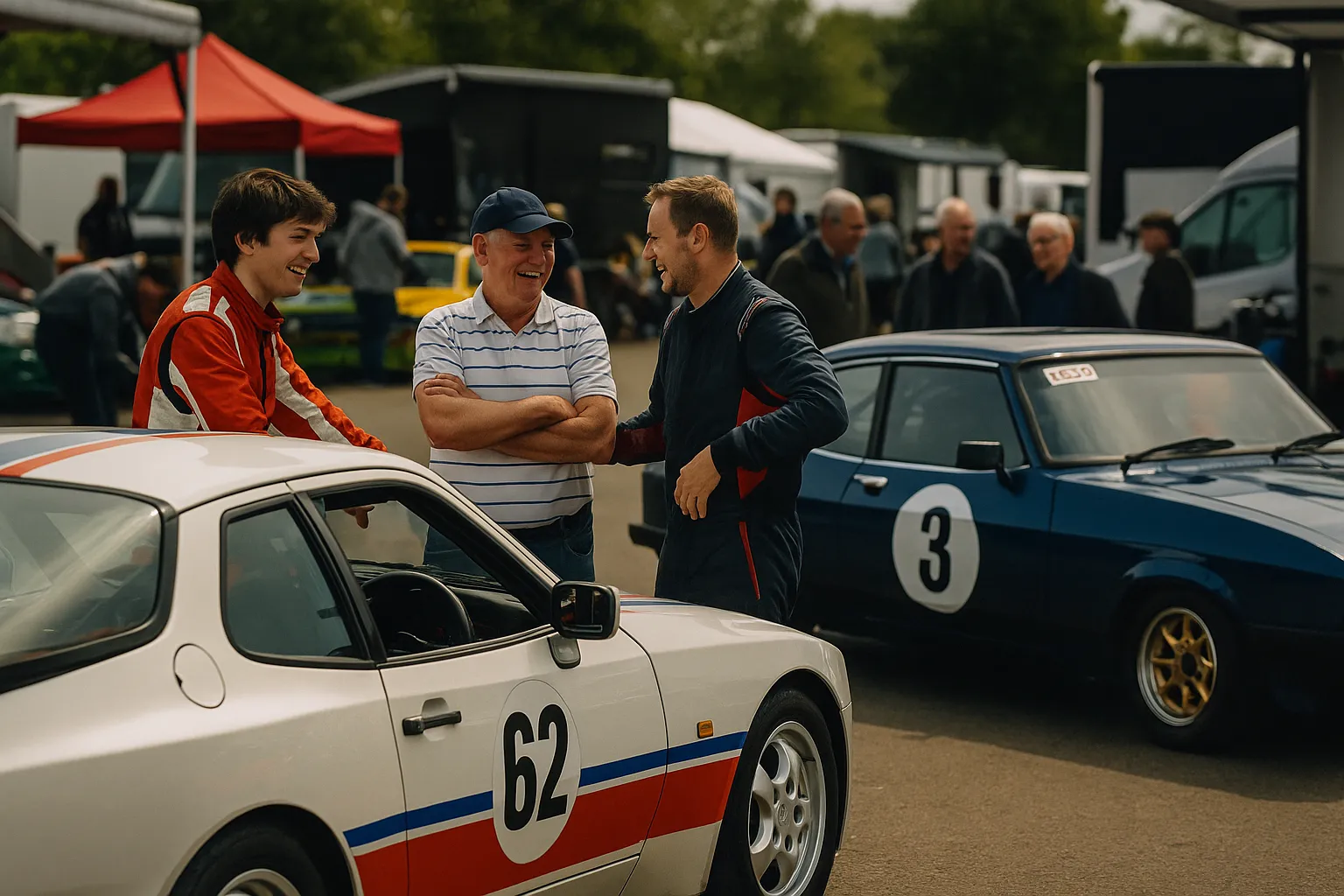
The Beating Heart of the Championship
Racing is what happens on the track — but the soul of the Future Classics Championship lives in the paddock. It’s there, between the smell of fuel and the hum of conversation, where friendships are forged, stories are told, and the real magic of this community unfolds. The roar of engines may define the spectacle, but the laughter, teamwork, and shared traditions are what keep it alive.
Every race weekend begins long before the cars line up on the grid. Drivers, families, volunteers, and fans arrive early, filling the paddock with an energy that feels more like a reunion than a competition. People greet each other like old friends — because that’s exactly what they are. They’ve shared countless weekends together, endured the same rainstorms, celebrated the same victories, and helped one another through the inevitable mechanical heartbreaks.
The Future Classics community isn’t just a group of racers — it’s a family that has built something rare in the world of motorsport: a championship that’s as much about people as it is about performance.
More Than Racing
From the outside, motorsport might look like a solitary pursuit — one driver, one car, one goal. But in the Future Classics paddock, it’s clear that success is never achieved alone. Every car represents a collective effort, a network of helping hands that make the impossible seem ordinary.
When a driver arrives at the circuit, they’re greeted not by rivals but by friends ready to help unload trailers and share tools. Someone always has a spare part, a tire pump, or an encouraging word. If a car breaks down during practice, half a dozen people gather instantly, offering wrenches, advice, and optimism. The spirit of competition is fierce on track, but off it, the atmosphere is cooperative — everyone wants to see everyone else succeed.
Even small gestures carry meaning. Someone might bring homemade sandwiches or coffee for the early risers. Another might lend a set of wheels to a fellow racer whose tires didn’t survive qualifying. The generosity runs deep, and it’s genuine. There’s no sponsorship deal or expectation of return — just an understanding that someday, someone else will do the same for you.
That’s what makes Future Classics special. It’s a championship that thrives not just because of skill or machinery, but because of kindness.
The Unsung Heroes
Behind every race weekend is an army of volunteers who make everything possible. They’re the marshals in orange suits standing at every corner, the timekeepers in the control tower, and the scrutineers inspecting cars with eagle-eyed precision. They don’t race, but their presence is just as vital.
Rain or shine, they’re out there — waving flags, clearing debris, and ensuring safety with quiet professionalism. Drivers trust them completely; a single yellow flag can mean the difference between a clean race and a collision. Yet despite their importance, these volunteers rarely seek recognition. They do it because they love the sport and want to be part of it.
Many of them have been involved for decades. They’ve watched generations of racers grow from nervous rookies to confident veterans. They remember faces, cars, and moments with the clarity of someone who has lived it all. Ask any driver, and they’ll tell you: the marshals are the guardians of the grid, the unseen backbone of every championship.
There’s also the media team — the photographers, commentators, and social media volunteers who capture the emotion and action for the world to see. Their lenses tell stories that words sometimes can’t: the focused eyes behind a visor, the shared grin after a tight race, the small gestures that define the spirit of the paddock.
A Tradition of Togetherness
Every championship develops traditions over time, and Future Classics has plenty. There’s the Friday evening meet-up, when early arrivals gather to share food, laughter, and predictions for the weekend. There’s the post-race debrief that somehow turns into a storytelling session, complete with jokes, playful teasing, and friendly exaggerations of near misses.
One beloved ritual happens after the final race: the impromptu celebration around the hospitality tent. The air fills with the smell of coffee, cakes, and chatter. Trophies might be handed out, but the real reward is the sense of unity that lingers long after the engines fall silent.
Kids run between trailers waving flags, mechanics lean against toolboxes exchanging advice, and someone inevitably turns up with a guitar or a speaker. The paddock becomes a small village where everyone knows each other’s stories. Friendships that began years ago are renewed, and new ones are formed with every passing season.
This culture of inclusivity means that newcomers never feel out of place. It doesn’t matter if you’ve been racing for twenty years or it’s your first season — once you’re in the paddock, you’re part of the family. There’s always someone ready to show you the ropes or share a tip about tire pressures or braking points.
The Shared Struggles
Racing, even at its most joyful, is never easy. Cars break. Engines fail. Budgets run tight. But in Future Classics, those moments of struggle become moments of solidarity.
When something goes wrong, it’s never just your problem. If a driver loses a gearbox mid-session, you’ll see others stop what they’re doing to help remove it. If someone’s engine refuses to start, half the paddock gathers with jump leads and optimism. Even when a competitor suffers a crash, they’re surrounded immediately by people checking in, offering support, and helping rebuild.
The shared challenges create bonds stronger than victory ever could. Everyone here knows the emotional and financial investment required to keep a car on track. They understand the sacrifices — the long nights, the missed family events, the relentless pursuit of reliability. That empathy turns rivals into allies, creating an environment where respect is as valuable as results.
It’s also what makes victory so meaningful. When someone finally stands on the podium, the cheers come not just from teammates, but from everyone who knows the journey it took to get there. Success feels communal — because, in a way, it is.
Beyond the Paddock
The Future Classics spirit doesn’t end when the race weekend is over. It carries into everyday life. Drivers and fans stay connected online, sharing updates about builds, restorations, and upcoming events. Photos from the weekend circulate with comments filled with encouragement and nostalgia.
Off-season months don’t feel like a break — they feel like anticipation. Plans for car upgrades are discussed, dates are marked for the next season, and friendships continue beyond the circuit. Some drivers meet for coffee or help each other with off-season projects. The paddock, it turns out, isn’t confined by fences or flags — it’s a state of mind.
That enduring sense of community is what gives Future Classics its soul. It’s not an organization built on contracts or marketing campaigns — it’s built on trust, shared effort, and the love of racing that connects people from all walks of life.
A Living Legacy
What’s happening behind the scenes of Future Classics is more than camaraderie; it’s the preservation of motorsport’s true essence. In an era dominated by technology and corporate branding, this championship reminds everyone what racing once was — and what it still can be.
Here, the community is as important as the competition. Every smile, handshake, and helping hand keeps the culture alive. It’s a living legacy that continues to grow with every season, shaped by the people who believe that racing should always be personal, passionate, and human.
Because when the engines stop and the paddock falls quiet, what remains isn’t the sound of victory or the shine of trophies. It’s the feeling of belonging. And that’s what makes the Future Classics community truly timeless — a family that races together, laughs together, and writes its history one story at a time.
The Morning Rituals of Race Day
As the sun climbs over the horizon, the paddock awakens in unison. The air is cool and heavy with the scent of damp grass, mixed with the faint aroma of coffee and petrol. Engines begin to murmur softly in the distance — not yet roaring, just clearing their throats. This is the hour when the Future Classics community feels most alive, a quiet choreography of preparation and anticipation.
Drivers wander between tents, helmets under their arms, sharing quiet conversations about tire choices and weather conditions. Someone has already started brewing tea for everyone, and a box of pastries makes its way down the row of parked trailers. The tension that comes before a race is softened by this ritual of togetherness — a collective calm before the storm.
Every paddock has its unspoken traditions. At Future Classics events, one of the oldest is the “morning walk,” when drivers and mechanics stroll around the circuit to study the surface, spot damp patches, and visualize their lines. Sometimes they walk alone, lost in concentration. Sometimes they go together, turning the inspection into friendly debate — “brake a little later here,” “watch for grip on the outside.”
The conversations are filled with laughter, advice, and the quiet respect that only racers can share. It’s a small but powerful reminder that while every driver races alone on track, nobody does this alone in life.
The People in the Shadows
Behind the glamorous roar of engines and the shine of polished cars, there’s a group of people who rarely appear in photographs but make the entire operation possible. They are the partners, parents, and friends who stand quietly in the background — the ones who handle logistics, keep the team fed, and provide emotional balance when things get tough.
Some spend the entire weekend timing laps, keeping notebooks filled with data and observations. Others are always ready with food, towels, and encouragement. There’s always one person with a spare umbrella when the rain starts, another with jumper cables when a battery dies, and someone’s mother offering homemade sandwiches to anyone who looks hungry.
These people are the emotional foundation of Future Classics. They may not sit behind the wheel, but they carry just as much of the journey. Every lap completed, every race finished, every comeback celebrated — it all belongs to them too.
It’s common to see a partner gently cleaning the car’s windshield before qualifying, or a child proudly holding the team’s logo on a small flag. They might not wear helmets, but they’re just as much a part of the team as the drivers themselves.
Between the Noise and the Silence
During the height of a race, the paddock transforms. The calm conversations are replaced by tension — engines revving, radios crackling, and the faint smell of burning rubber carried on the wind. People lean over pit walls, eyes fixed on the track. Some clutch timing sheets; others simply hold their breath.
When the cars flash past, you can feel the pulse of the community beating in sync. Each lap brings both excitement and anxiety — will everyone make it through cleanly, will someone push too hard, will the car hold together? For a few minutes, time seems suspended.
Then, as quickly as it began, the roar fades. The checkered flag waves. One by one, the cars return to the paddock, ticking and hissing as they cool down. What follows is a rush of emotion — hugs, handshakes, congratulations, and relief. Mechanics crowd around to check fluids and brakes. Friends snap photos, capturing smiles that are equal parts exhaustion and joy.
The noise dies down, and the paddock returns to its natural rhythm. Conversations resume, laughter returns, and stories from the race begin to circulate. Someone describes an overtake at Turn 3 in vivid detail; another recalls narrowly avoiding a spin. These post-race stories are shared like folklore — retold, exaggerated, and cherished.
The Glue That Holds It All Together
Every community has its heroes — the people who quietly keep everything running. In Future Classics, that often means the organizers, coordinators, and volunteers who make sure every race weekend runs smoothly.
They’re the first to arrive and the last to leave. They manage registration, check safety gear, organize timing, and make sure the paddock feels like home. They handle the chaos with patience, calm voices, and warm smiles. Most of them aren’t paid professionals — they’re enthusiasts who give their time because they believe in what this championship represents.
Their dedication creates a sense of stability that everyone depends on. Drivers know that no matter what happens — rain, delays, technical issues — the show will go on, thanks to these people behind the scenes. They are the quiet glue holding together a loud and unpredictable sport.
The Joy of Small Moments
While the highlight of any weekend is the racing itself, the moments that stick with people most aren’t always the fastest laps or biggest trophies. They’re the small, human moments that happen in between.
Like the group of drivers huddled under one tent during a sudden downpour, joking about who forgot to pack rain gear. Or the sight of an older racer teaching a younger one how to heel-and-toe properly. Or the round of applause that erupts when someone finishes a race after a year of mechanical setbacks.
These moments can’t be scripted. They happen naturally, shaped by the people who refuse to treat racing as just a competition. They turn the paddock into something far more meaningful — a place of belonging, shared passion, and understanding.
In a world that often feels fast, digital, and disconnected, the Future Classics paddock is refreshingly real. Every handshake is genuine, every conversation face-to-face. There’s dirt under fingernails, oil on hands, and pride in every smile. It’s messy, imperfect, and completely human — and that’s why it’s so special.
When the Weekend Ends
As the last race concludes and the paddock starts to empty, a certain melancholy settles in. The laughter fades into the hum of generators being switched off and trailers being packed. Helmets are stored away, awnings folded, and the once-busy garages return to silence.
But even as people prepare to head home, nobody rushes. Drivers linger, chatting with friends, making plans for the next event. Some exchange parts, others trade advice, and everyone promises to meet again soon.
The drive home is quiet, but full of reflection. Every driver replays the weekend in their mind — the near misses, the victories, the camaraderie. The exhaustion fades into gratitude. Another chapter of shared memories has been written, and the anticipation for the next one begins before the engines even cool.
The Spirit That Never Sleeps
Long after the lights go out and the paddock empties, the Future Classics spirit continues to live on. It’s in the late-night messages between teammates discussing car setups. It’s in the photos shared online, the laughter echoing through group chats, the excitement that builds as the next race weekend approaches.
For everyone involved, this isn’t just a hobby — it’s a lifestyle, a rhythm that shapes their year. It teaches patience, teamwork, humility, and gratitude. It’s a reminder that while the cars are what draw people in, it’s the community that makes them stay.
Because at its core, the Future Classics Championship is not just about preserving cars — it’s about preserving connection. It’s proof that passion can bring people together across generations, professions, and backgrounds. It’s a story of teamwork, friendship, and the shared belief that racing, at its best, is a human story.
And when the next season begins, they’ll all be there again — the drivers, the families, the marshals, the mechanics, the storytellers — gathered under the same sky, ready to write the next chapter together.
Not just as racers. Not just as enthusiasts. But as one community — the heart and soul behind Future Classics.