
A Northern Journey to the Edge of Speed
Every driver knows that Kirkistown is different. It’s more than just a racetrack — it’s a test of courage, precision, and respect for the craft of driving. Tucked away on the Ards Peninsula in Northern Ireland, Kirkistown Circuit combines the charm of a countryside airfield with the heartbeat of motorsport history. For the Future Classics Championship, coming here always feels like stepping into the roots of racing itself — raw, unpredictable, and deeply human.
The trip north began days before the event. Convoys of trailers and vans snaked their way through the Irish countryside, carrying beloved race cars that had been tuned and polished to perfection. Inside each transporter sat a blend of nerves and anticipation — drivers thinking about braking points, mechanics double-checking torque settings, and families excited for another unforgettable weekend.
When the first glimpse of the circuit came into view, everyone felt it — that familiar surge of excitement that never fades no matter how many seasons they’ve raced. Kirkistown, with its long straights and demanding corners, rewards bravery but punishes carelessness. Every racer knows that the key to success here lies in rhythm, patience, and absolute trust in your machine.
A Track That Forgives Nothing and Rewards Everything
The layout of Kirkistown looks simple on paper — just over a mile and a half long, flat, and open. But that simplicity hides layers of complexity that only reveal themselves once you’re out there. The daunting Colonial corner, the high-speed run down to Fisherman’s, the deceptive hairpin — every section asks a different question, and the car’s response determines how the rest of the lap will unfold.
What makes this place special is how it brings out the best in both drivers and engineers. There’s no hiding behind horsepower or expensive upgrades. Precision, balance, and bravery are what make the difference. Drivers must sense the grip through the steering wheel, feel the surface beneath the tires, and react in milliseconds. It’s racing distilled to its essence — where skill outweighs technology.
As the Future Classics teams set up their tents along the pit lane, the air was filled with the sound of tools clinking and engines being warmed up. MicksGarage banners fluttered beside the track, a familiar symbol of support that has followed the series through every round. The camaraderie was instant — laughter, handshakes, and the shared routine of preparing cars that might be decades old but still ready to give everything.
Early Morning Preparations
Saturday morning began with the usual controlled chaos of a race weekend. Drivers huddled around steaming mugs of coffee, glancing at weather apps and debating tire choices. Some worried about light rain predicted for the afternoon, while others shrugged — Kirkistown had seen it all before.
Engines began to fire up one by one, each with its own distinct tone — the raspy bark of a Peugeot 205, the deep growl of a BMW E30, the high-revving whine of a Honda Civic. As cars rolled into the scrutineering area, officials moved swiftly, checking safety gear and mechanical compliance. The Future Classics ethos has always been about fair play and accessible racing — a space where well-prepared enthusiasts can compete on equal terms, regardless of budget or experience.
Spectators trickled in, many of them locals who have followed the championship for years. They came not just to watch but to feel — the vibration of engines, the smell of oil and fuel, the tension that builds before the lights go out. Families set up along the fences with picnic blankets, and photographers scouted for the perfect vantage points.
Qualifying Drama and Determination
Qualifying sessions at Kirkistown are an art form in themselves. The wind sweeping across the circuit can shift without warning, making it harder to judge braking distances. One lap might feel flawless, the next completely unpredictable. Drivers pushed to find the delicate line between confidence and overcommitment.
The timing screens flickered as the field shuffled constantly. One moment, a lightweight hatchback set the pace; the next, an old saloon found unexpected grip through the hairpin. Every improvement — every tenth of a second — mattered. The paddock was alive with energy as teams compared data, adjusted tire pressures, and debated gear ratios.
But beyond the stopwatch, what stood out was the sense of perseverance. One car limped back to the pits after clipping a curb too aggressively, suspension damaged but fixable. The driver’s frustration melted away when three neighboring teams jumped in to help repair it. In less than an hour, the car was back on its wheels, ready to rejoin the action. That’s the Future Classics spirit — no one left behind, no competitor treated as an enemy.
The First Race: Courage Meets Control
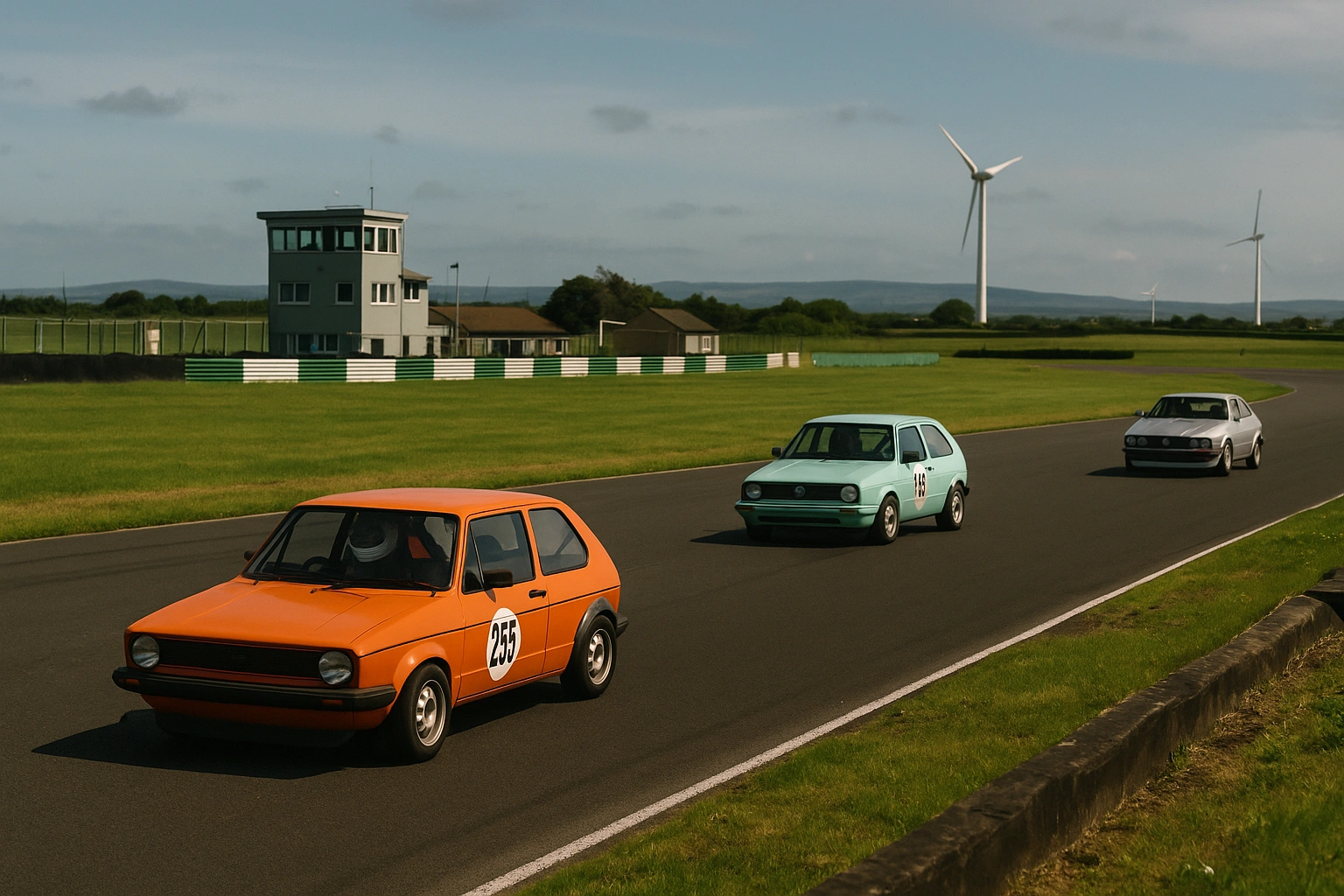
By midday, the track was ready, and the first race was about to begin. The grid formed up under a cloudy sky, with a cool wind sweeping across the circuit. Marshals stood ready, flags poised. Engines roared, exhausts crackled, and the smell of high-octane fuel hung thick in the air. When the lights went out, it felt like the world held its breath.
The launch off the line was fierce. The front row battled into the first corner, elbows out but with respect intact. Midfield drivers jostled for space, while rookies cautiously found their rhythm. Kirkistown’s long straights rewarded bravery, but the corners demanded finesse — one misstep could mean losing five positions in seconds.
Lap after lap, the crowd was treated to pure, old-school racing. No massive downforce, no advanced electronics — just raw driving skill and mechanical connection. Cars slid gracefully through corners, tires squealing, engines singing their metallic symphony. From the pit wall, team members watched anxiously, radios crackling with snippets of communication: “Tire temps rising… hold position… three laps to go.”
Halfway through the race, a sudden drizzle added spice to the already tense battle. The surface grew slippery, forcing drivers to adapt instantly. Those with smoother hands thrived, keeping their lines tidy and their confidence steady. One spectacular save in Turn 1 earned applause from the grandstand — a reminder that even at the grassroots level, moments of brilliance can feel like world-class performances.
Between Laps and Lives
When the checkered flag waved, the applause was loud and genuine. Drivers pulled into the paddock, steam rising from hot engines, brakes glowing faintly. For some, it was a victory; for others, a lesson. But every face carried the same expression — satisfaction. Because at Kirkistown, just finishing a race cleanly is an achievement to be proud of.
As mechanics worked on cooling systems and tire changes, conversations drifted naturally toward shared experiences. There were stories of past races in the rain, tales of late-night rebuilds, and jokes about the quirks of old engines that refuse to die. In between the laughter, you could sense the deeper connection that holds this championship together — a shared respect for history, engineering, and endurance.
The day wasn’t over yet. Another race awaited, and with it, another chance to test everything once more — from mechanical reliability to driver resolve. The clouds thickened again over the straight, the wind shifting direction just as it always does at Kirkistown. But nobody minded. That unpredictability was part of the magic, part of what makes every lap here an act of trust and devotion to the sport they love.
Afternoon Intensity and Shifting Skies
The clouds that had hovered all morning finally gave way to streaks of sunlight, glinting off the windscreens and polished bodywork of the Future Classics cars lined up for the afternoon session. The air buzzed with quiet energy — the kind that settles over a paddock before the next storm of adrenaline. Mechanics tightened wheel nuts one last time, drivers adjusted mirrors, and the smell of hot oil lingered between the rows of trailers.
It was the kind of atmosphere where every sound carried meaning: the hiss of an air gun, the metallic click of a helmet visor, the distant whistle of the wind sweeping across the flat airfield circuit. Kirkistown demanded focus, and even the most experienced drivers could feel the weight of its expectations.
As engines fired up once again, the sound was almost orchestral. Each car had its own note, its own rhythm, and when they all came together, it was a symphony that could be felt in your chest. The grid filled with color and energy — a blend of classic silhouettes that reminded everyone of a time when racing was pure and mechanical, not digital.
When the lights went out, it wasn’t chaos — it was precision. Dozens of drivers launching together, each threading through the first corners like a dance they’d rehearsed for years. The crowd leaned forward as cars sliced through the chicanes, exhausts crackling and tires singing against the tarmac.
A Race of Strategy and Survival
This race wasn’t about raw speed — it was about strategy. The surface was changing with every lap, patches of moisture blending with dry lines that caught the afternoon sun. Those who managed their tires wisely began to move forward, while others struggled with grip in unpredictable sections.
One car that had started mid-pack was making quiet progress. Lap after lap, it found opportunities where others hesitated — braking later into Fisherman’s, holding tighter lines through the hairpin. It wasn’t a spectacular display of aggression but of calm, measured control. That’s what Kirkistown rewards: consistency over chaos.
Further back, a handful of cars battled fiercely for position. From the outside, it looked like chaos — bumpers almost touching, brake lights flashing — but within that space, there was immense trust. Every driver knew the others well enough to race within inches, to risk everything but never recklessly.
Midway through, the track began to dry fully. The pace quickened. Lap times tumbled as confidence returned. Spectators clapped and cheered from behind the barriers, recognizing not just the speed but the style. These weren’t professional racers with million-euro machines — they were passionate enthusiasts, wringing every ounce of performance from cars they built and loved themselves.
The Spirit of Future Classics
It’s often said that the Future Classics Championship isn’t just a series — it’s a mindset. At Kirkistown, that spirit was impossible to ignore. Between races, there were no egos, no barriers between teams. A driver who finished first could be found moments later helping someone replace a snapped belt or bleed brakes before the next run.
Hospitality tents were alive with conversation. Steam from coffee cups mingled with the smell of brake dust, and laughter echoed between the pit garages. A child wearing an oversized team jacket asked a driver for a photo, and he gladly crouched down beside the car, grinning as if he’d just won Le Mans.
That connection — between drivers, fans, and organizers — is what keeps the championship thriving. It’s not driven by money or prestige but by passion. Everyone here has a story: a first race that sparked an obsession, a car rebuilt from scrap, a friend lost and remembered with every lap. Kirkistown, in its windswept simplicity, becomes the perfect canvas for those stories to unfold.
When the Unexpected Happens
No race weekend is complete without surprises, and Kirkistown provided plenty. In the second half of the day, just as the final session began, a brief drizzle rolled in from the coast. The track became slick again, and visibility dropped slightly. For a moment, it felt like the circuit itself was testing everyone’s resolve.
Drivers adjusted immediately. Some tiptoed cautiously through corners, while others attacked the slippery surface with daring confidence. A few cars danced on the edge of control — tail-happy slides that drew gasps and cheers from the crowd. It was dramatic but never dangerous, a testament to the skill level across the grid.
Then came one of those moments that define racing. A veteran driver, known for his calm precision, lost traction in the final chicane, the car twitching violently before catching grip again and shooting back onto the straight. The crowd erupted in applause — not because of speed, but because of mastery. It was instinct meeting experience in a split second.
When the race ended under the waving checkered flag, everyone exhaled. Marshals gave thumbs up to passing drivers, the pit wall erupted in handshakes and pats on the back, and spectators clapped until the last car crossed the line. It wasn’t about who won — it was about what they’d all just experienced together.
Reflections in the Paddock
As the sun began to set, Kirkistown transformed once again. The light softened, turning the circuit into a landscape of long shadows and golden hues. Cars sat cooling in silence, their paintwork still warm to the touch. Drivers gathered in small circles, recounting their favorite moments from the day — a daring overtake, a clean defensive line, or simply surviving a tricky corner without incident.
It’s in these quiet moments after the noise fades that the true meaning of Future Classics becomes clear. It’s about preserving something irreplaceable — the connection between human skill and mechanical motion. Every scratch on a fender, every dented panel tells a story of risk, resilience, and passion.
The organizers moved through the paddock with familiar ease, checking in with teams, thanking marshals, and making sure everyone was safe and content. There was no corporate distance here — just a group of people united by love for racing and for each other.
As dusk approached, the final prize-giving took place. Trophies were handed out with handshakes, laughter, and applause. But the real reward wasn’t the silverware — it was the satisfaction of knowing that everyone had been part of something special. Even those who hadn’t finished a race stood proud, because participation itself carried weight. In Future Classics, showing up, competing fairly, and sharing in the experience means more than a podium finish.
The Road Ahead
When the trailers began to load up and the paddock lights flickered off one by one, the silence felt both peaceful and bittersweet. Drivers hugged their teammates, made promises to return stronger, and waved goodbye to the marshals who had kept them safe all weekend. The hum of departing engines faded into the evening air.
Kirkistown had once again reminded everyone why they love this sport. It’s not about perfection — it’s about persistence. Not about fame — but about fellowship. In a world that moves too fast, places like this preserve what’s real: the noise, the smell, the grit, and the emotion that no simulator or statistic can ever replace.
As darkness settled over the circuit, one could almost imagine the echoes of the day’s races still lingering — the roar of engines carried on the wind, the applause of the crowd fading into the distance. The championship would soon move on to its next round, but part of every racer would stay here, embedded in the tarmac, in the stories that only a place like Kirkistown can tell.
Because in the end, that’s what Future Classics is truly about — keeping the racing spirit alive. Not through technology or spectacle, but through people. Through those who build, drive, cheer, and believe. The cars may be old, but the passion they carry remains timeless, roaring down the straight at Kirkistown long after the last light goes out.